Dear Mr. Premack: My husband recently died in an auto accident caused by another driver. There are two auto policies that will pay a benefit — the other driver's and our own underinsured motorist coverage. My husband did not have a will. Both insurance companies are telling me that the benefits must be equally divided among all heirs, which they say are his parents, me, our two adult children, and his daughter from a previous relationship. They cite two Texas cases to support their position but cannot name a Texas statue that says this is how proceeds must be distributed. Is what they are saying correct? It seems that at least for the policy that we paid for I should be the sole beneficiary.

LR

The insurance policies you speak of are not like life insurance with a beneficiary clause. Rather, they are casualty insurance meant to compensate for losses someone suffers. The other driver caused the accident, so the other driver is liable for the damages caused. But no one knows exactly what those damages are or exactly who suffered those damages.

The other driver's policy covers his liability to whatever limit he purchased. Your policy's "uninsured/underinsured" provision provides coverage for damages beyond the limits of the other driver's policy. However, neither policy defines to whom there is liability, or in what amounts. Since there is as yet no court judgment telling the insurers to whom they are liable — and to whom they are not liable — they are throwing money onto the table in hopes that all parties of interest will voluntarily accept the funds and release them from further liability.

Many people were damaged in this auto collision. Your husband suffered damages. Though he had no will (which makes things more difficult) legal action must be taken to define: 1) who will represent his interests as administrator of his estate, and 2) to whom the damages he suffered should be paid. The state's laws on intestacy will be applied by the court to identify his heirs.

You also suffered damages, so your lawyer will represent your interests and help you receive the compensation due to you, separately from that due to your husband's estate. Your kids and his parents suffered damages, and may also have grounds for separate compensation of their own.

The most important thing to remember is this: both insurance companies want to pay as little as possible despite the fact you paid for coverage. You need an attorney experienced in personal injury lawsuits to represent you. You also need an attorney to probate your husband's estate and an experienced personal injury lawyer for the estate. Anyone else who suffered damages should hire their own attorneys. No one should take any money from the insurers or sign anything without review by and approval from their own attorneys.

And you should have a will drawn up for yourself as soon as possible so that your kids won't have such a difficult legal struggle if you should die as well. Dear Mr. Premack: I am aware of the laws concerning assisted suicide in Texas, but do those laws only concern a physician and his or her patient?

Anon

The Texas Penal Code makes it a crime to intentionally aid or attempt to aid another person to commit or attempt to commit suicide in Texas. Punishment ranges from misdemeanor treatment to time in the state penitentiary, depending on whether the attempted suicide causes bodily harm.

The crime of "aiding suicide" in Texas applies to any person who breaks this law. It is not limited by just forbidding these actions to a doctor; all persons are forbidden to aid another in committing suicide.

Whether that law is right or wrong, it is the law in Texas and it seems unlikely that Texas will be changing the poliJustify Fullcy anytime soon. Oregon and Washington state do allow legal physician-assisted suicide when very specific statutory guidelines are followed. Montana's courts recently ruled that its constitution allows the right to a dignified death, and that physician-assisted suicide for a competent terminally ill person will no longer be treated as a crime. Texas forbids physician-assisted suicide along with all other forms of aided suicide.
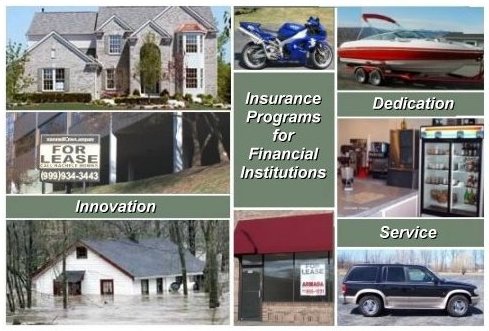
As the 2009 hurricane season arrives, many homeowners are finding insurance either more expensive or harder to get.

Homeowners from New York to Florida and in the Gulf Coast region are again seeing premiums rise and coverage change. And more are losing their coverage. Hurricane season starts Monday.

Insurers “just don’t like being in the business … too much risk,” said Scott Hall of Market Street Advisers, a financial advisory firm in Wilmington, N.C.

Homeowners insurance premiums are up about 3 percent nationwide, according to the Insurance Information Institute.

Last year’s losses and the financial market turmoil have helped push up rates.

New York Insurance Superintendent Eric Dinallo is stepping down, leaving the most important U.S. regulatory post in the industry vacant.

Dinallo will become a visiting professor at New York University’s Stern School of Business, Governor David Paterson’s office said in a statement yesterday. Insurance is regulated in the U.S. by states, giving the New York watchdog an outsized role with oversight in the country’s financial center.

Dinallo, 45, spoke out about the need for cooperation between state and federal regulators in the aftermath of the U.S. bailout of American International Group Inc. He testified in Congress about efforts to protect policyholders of AIG, once the world’s biggest carrier. When bond insurers faltered, he engineered the entrance of Warren Buffett’s Berkshire Hathaway Inc. to bolster the market.

“Without a doubt he tried to set the agenda,” said Robert Haines, an analyst at CreditSights Inc. “He was putting ideas out there and was trying to address the problems much more so than a lot of the regulators out there that seemed to be trying to cover their” reputations.

Dinallo was appointed to the insurance post by then- Governor Eliot Spitzer in 2007. Dinallo assisted on probes of financial firms when he worked for Spitzer at the state attorney general’s office. The New York Times said May 27 Dinallo may be a candidate in the race to become attorney general. His resignation from the insurance post is effective July 3.

Worker’s Compensation

Marissa Shorenstein, a spokeswoman for the governor, had no comment on who would succeed Dinallo. Andy Mais, a spokesman for the New York insurance department, said Dinallo was unavailable for comment, and referred questions to Paterson’s office.

Paterson, in his statement, said Dinallo helped reform workers’ compensation and collaborated with state officials and federal regulators in the rescue of New York-based AIG. The governor and Dinallo had a “wonderful working relationship,” Shorenstein said.

“We are living through one of the most challenging times in our country’s financial history,” Dinallo said in a statement distributed by Business Wire. “Joining NYU gives me a great opportunity to continue to participate in critical financial issues from a new perspective.”

Dinallo helped bolster the business of insuring municipal bonds after companies including MBIA Inc. and Ambac Financial Group Inc. were overwhelmed by losses on securities backed by home loans. Dinallo in 2007 approved Berkshire’s entry into the business, then brokered deals to allow money-losing guarantors to make partial payments on insurance contracts with banks.

Bond Insurance

He also helped MBIA split its municipal bond insurance business from the mortgage-related debt guarantees that led to the loss of its top credit ratings.

“He used his office as a bully pulpit,” Sean Dilweg, Wisconsin insurance commissioner and a friend of Dinallo, said in an interview. “He really laid the groundwork for all the discussions we have now” about preventing the collapse of financial firms.

Bank of America Corp., JPMorgan Chase & Co., UBS AG and 15 more of the world’s largest financial companies this month challenged Dinallo’s approval of MBIA’s split, suing to reverse the biggest bond insurer’s separation as they claimed it illegally cut their odds of getting paid on policies.

Dilweg, who oversees Ambac’s main unit, said in a March interview that “we’ve always had concerns with splitting the book because you get into drawing lines and giving preferences,” referring to that New York-based insurer’s guarantees.

Looking to New York

Howard Mills, who was New York insurance superintendent in 2005 and 2006, said watchdogs elsewhere look to New York for guidance and the job is “seen justifiably as the most significant regulatory post for insurance.” Mills is now chief adviser for the insurance group at Deloitte & Touche LLP.

A graduate of New York University, Dinallo previously worked for Willis Group Holdings Ltd., the world’s third-largest insurance broker.

Dinallo was called to testify in Congress and the state legislature about the risk of credit-default swaps, the derivatives that brought AIG within hours of bankruptcy.

The contracts, which allow investors to speculate on the creditworthiness of borrowers, were “more dangerous” than gambling, Dinallo said in December at a New York Assembly hearing in Manhattan. Unlike casinos, swaps sellers aren’t required to keep funds to pay losing wagers, he said.

Broader Oversight

Dinallo said in September that a portion of the market should be regulated like insurance to ensure companies have enough funds to meet commitments. He shelved the proposal because of progress by federal regulators on broader oversight of the market.

Illinois Insurance Director Michael McRaith and Dinallo were heading a committee of the National Association of Insurance Commissioners looking into whether regulators were too dependent on ratings from firms including Standard & Poor’s and Moody’s Investors Service. Dinallo said in a Wall Street Journal op-ed in March that the current rating system is “fundamentally flawed” and leads to inflated credit grades.

“I’ve enjoyed working with Eric for the last couple of years,” McRaith said in an interview. “I’ve not always agreed with everything Eric’s said. But, he’s always engaged, and he moved the discussion forward.”


A.M. Best Co. has affirmed the financial strength rating (FSR) of 'A+' (Superior) and issuer credit ratings (ICR) of "aa-" of Ohio-based American Modern Insurance Group and its P/C members. Best has also upgraded the FSR to 'A+' (Superior) from 'A-' (Excellent) and ICR to "aa-" from "a-" of American Modern's formerly separately rated subsidiary, First Marine Insurance Company of Osage Beach, Missouri. The outlook for all ratings is stable.

Best noted that the American Modern companies are owned by Munich American Holding Corporation, the U.S. based subsidiary of Germany's Munich Reinsurance Company.

"The ratings of American Modern reflect its historical favorable capitalization, consistent investment income and generally profitable underwriting performance in recent years," said Best. "The group functions as a niche provider of insurance products for the residential property, recreational vehicles and financial services markets through its multi-faceted distribution channels. The ratings also acknowledge the financial flexibility afforded American Modern as part of the Munich American Holding Corporation organization.

Partially offsetting these positive rating factors are American Modern's above average expense levels in relation to the property lines industry composite and elevated premium leverage. In addition, as over half of American Modern's business is residential property, its performance is susceptible to frequent and severe weather events as demonstrated in 2008."

However, Best added, "American Modern continues to maintain reinsurance programs, modify underwriting criteria and selectively spread its geographical risks in catastrophe-prone areas to mitigate potential effects of future catastrophic events."

First Marine is a provider of various watercraft coverages and was purchased by American Modern Home Insurance Company of Cincinnati in 2008. "The ratings of First Marine reflect its participation as a new member of American Modern's inter-company pooling agreement."

Best also said it has affirmed the FSR of 'A-' (Excellent) and ICR of "a-" of American Modern Life Insurance Company and the FSR of 'B++' (Good) and ICR "bbb" of Southern Pioneer Life Insurance Company of Trumann, Ariz. The outlook for these ratings is also stable.

Best explained that the ratings on the life companies reflect their "strong risk-adjusted capitalization and the support of their holding company, American Modern.
Partially offsetting these factors are the companies' modest earnings performance, their relatively small contributions to the parent organization and a susceptibility to further erosion of direct premiums written due to the economic environment and decline in lending."

CHARLOTTE, N.C.--(BUSINESS WIRE)--Today, Nationwide Insurance teamed up with NASCAR star Kyle Petty, David Ragan and Erik Darnell, drivers of the NASCAR Nationwide Series No. 6 Roush Fenway Ford, to raise awareness about DWD – Driving While Distracted.

“Young drivers today are faced with more distractions than ever before, and diverting their attention away from the road with cell phone calls and text messages creates a very dangerous situation,” said Kyle Petty. “It is important for our children to learn about the risks associated with distracted driving. If we can raise awareness on this particular subject I believe we can save lives.”

Nationwide Insurance brought NASCAR to New Technology High School at Garinger to launch the second year of its education campaign to spread the message of dangers of driving while distracted. Students saw firsthand the impact text messaging has on their driving abilities while racing in a NASCAR simulator.

"I am so glad Nationwide Insurance is raising awareness about Driving While Distracted,” said David Ragan, driver of the No. 6 Discount Tire Ford Fusion. “I am extremely focused while on the road and very conscious of what is going on around me. Our young motorists can learn a valuable lesson in safety through this special program. If we all do our part in abiding by the laws of the road, it will make our daily commute more enjoyable and much safer.”

The National Highway Traffic Safety Administration says distracted drivers account for nearly four out of five crashes in the U.S. The problem is especially bad for young drivers. In a 2008 survey, Nationwide found that nearly 40 percent of the teenagers and young adults surveyed admitted they send and receive text messages while driving - the same percentage of those questioned who said they have been hit or almost hit by another car whose driver was talking on a cell phone.

“It doesn’t matter if I’m on the track going 180 mph or just driving to the shop, I’m always aware of my surroundings. Staying alert and avoiding distractions while behind the wheel not only keeps me out of trouble, but also those around me. Nationwide Insurance has done an outstanding job with the Driving While Distracted program and I am proud to be a part of it,” said Rookie of the Year Contender Erik Darnell, driver of the No. 6 Northern Tool + Equipment Ford Fusion.

Nationwide and the National Safety Council developed www.NationwideSmartRide.com, a Website to provide parents and teens free tools and resources to help develop safe drivers and reinforce smart behavior. It is available free to anyone regardless of whether they are a Nationwide customer.

“Clearly, distracted driving has taken over our roadways and Nationwide wants to educate all drivers that they need to focus on the road, not on their technology, when behind the wheel,” said Bill Windsor, Associate Vice President of Safety for Nationwide Insurance.

New Technology High School at Garinger was selected for this event because of their Racing to Inspire, Stimulate & Educate (RISE) program. RISE, a gang prevention program for high school youth, focuses on career options in motorsports and other science, technology, engineering and math related careers. RISE has 20 Garinger High School students in hands-on learning opportunities so that they may discover paths that lead to potential work within North Carolina’s motorsports industry.

The NASCAR Nationwide Series will be at Lowe’s Motor Speedway on Saturday, May 23, 2009 for the Carquest Auto Parts 300. Coverage beings at 7 p.m. on ESPN2.

Nationwide, based in Columbus, Ohio, is one of the largest and strongest diversified insurance and financial services organizations in the U.S. and is rated A+ by A.M. Best. The company provides a full range of personalized insurance and financial services, including auto insurance, motorcycle, boat, homeowners, life insurance, farm, commercial insurance, administrative services, annuities, mortgages, mutual funds, pensions, long-term savings plans and health and productivity services. For more information, visit www.nationwide.com.

The NASCAR Nationwide Series logo and word mark are used under license by the National Association for Stock Car Auto Racing, Inc., and Nationwide Mutual Insurance Company. NASCAR ® and the NASCAR logo are registered trademarks of the National Association for Stock Auto Racing, Inc. Nationwide SmartRide is a service mark of Nationwide Mutual Insurance Company. Nationwide, On Your Side and the Nationwide Frame mark are federally registered service marks of Nationwide Mutual Insurance Company.

As it girds for hurricane season, Texas has plenty to worry about. The Texas Windstorm Insurance Association (TWIA) - which provides coverage for high risk coastal properties - has ended up at the brink of insolvency paying Hurricane Ike claims.

Insurers operating near the coasts have begun to cut back on coverage and make noises about leaving the state. If that wasn't enough, some members of Congress now want to change tax law in a way that will drive already expensive coastal Texas insurance premiums even higher. The tax law change involves something called "offshore affiliated reinsurance" - a rather esoteric product that matters a lot here in Texas.

Explaining why requires some background. To begin with, all sizeable primary insurers - companies like State Farm, Allstate, and Farmers' - that deal with consumers, buy insurance of their own - reinsurance - to help cover particularly large losses and diversify their own portfolios. (TWIA itself purchased about $1.5 billion in reinsurance prior to Hurricane Ike.) Particularly in high-hurricane-risk areas like Galveston, many companies find it advantageous to buy some or all of their reinsurance from a parent or sister company that they know won't abandon them following a major storm.

Most reinsurance companies have headquarters outside of the U.S. and TWIA, like most other U.S. insurance companies, buys most of its reinsurance from these "offshore companies." The existence of offshore companies benefits everyone: through international markets Texas's hurricane risk gets pooled with Indonesia's risk of cyclones. Since the events never occur at the same time - the storm seasons happen at different points in year - the reinsurance costs less. Offshore reinsurance competition drives down prices and, in some cases, "affiliated" reinsurance from a sister company proves the best deal of all.

Right now, international and U.S. reinsurance transactions get taxed at just about the same overall rates. Sometimes U.S. companies get a better deal and sometimes companies from elsewhere do a little better.

But this could change: A proposal winding its way through Congress - sponsored by Richard Neal (D-Ma.) - would impose an enormous tax on these international affiliated reinsurance transactions that would place non-U.S. companies at a huge disadvantage.

This would force many offshore companies to write less coverage or even withdraw from the Texas market al together. Although U.S.-based reinsurers would take advantage of this by selling more reinsurance to other U.S. primary insurers (including their own affiliates) they still have limited capacity.

As a result, primary insurers that couldn't buy enough reinsurance would have to raise rates and reduce coverage in order to build the financial cushion they typically would get from affiliated offshore reinsurance.

And consumers would pay the tab. The economic research and consulting firm the Brattle Group has estimated that, under Neal's proposal, total reinsurance capacity would fall 20 percent and insurers would have to raise premiums by an estimated $10 to $12 billion to give them the cushion they would otherwise have if they could buy enough reinsurance.

Texans who live near the coast would pay a lot of this - at least $350 million. Since Texas' Gulf Coast counties rank among the state's poorest, furthermore, already disadvantaged Texans would see premiums soar. And, because international insurers would probably stop doing business in the U.S. rather than pay the tax, the federal government wouldn't get much revenue. Even worse, some European officials have threatened a trade war over the issue.

Raising taxes on offshore affiliated reinsurance is bad idea. If Rep. Neal's bill moves forward, Texans will see their homeowners' insurance bills soar. Members of the Texas Congressional delegation should tell their colleague from Massachusetts to stop tinkering with the federal tax code. Ike hurt Texas badly enough. Congress needs to avoid tax law changes that could make things even worse.

Eli Lehrer is a senior fellow at the Competitive Enterprise Institute, where he directs the Center for Risk, Regulation, and Markets.

This article originally appeared in the Austin American Statesman and is reprinted with permission from the author.

BY JOHN IZZO AND KEVIN GRENIER

FOR THE FREE LANCE-STAR

It's easy to overlook insurance in today's difficult economic times. Even though insurance is seen as a commodity, it is imperative that you get the best coverage.

You need to know how insurance works. Policyholders pay a premium to insure against shouldering the entire cost of an accident. The major forms of personal insurance are automobile, homeowners and umbrella.

AUTOMOBILE INSURANCE

Everyone is familiar with auto insurance since it's mandatory in almost every state. Highlighted below are seven tips that will help you save on auto insurance:

Be a safe driver. That's the best way to reduce your auto insurance premiums.

Shop around. Today you can compare coverage options online for several companies simultaneously.

Ask about discounts. Some insurance companies offer discounts to members of organizations and associations. Additional discounts may apply for insuring multiple cars on the same policy, having air bags, completing a defensive driving course or being a good student.

Increase deductibles. Increasing your collision and comprehensive deductibles --the amount you pay out of pocket in the event of an accident--will reduce your premium.

Drop comprehensive and collision coverage on an older car.

Reduce annual mileage.

Check your insurance before buying a new car. Some cars cost more to insure than others.

Insurance actuaries use accident statistics to project losses and determine the risk a company can take. Rates are based on driving experience, number of accidents and driving offenses, age, type of vehicle, area in which you drive and more.

Insurance coverage protects you if you injure someone or their property, get hit by another car, have an accident with an uninsured driver, or suffer vehicle damage as a result of theft, flood, fire or other natural perils. A deductible (out-of-pocket payment) usually applies.

HOMEOWNERS INSURANCE

One insurance product that is often overlooked is homeowners coverage. The standard homeowners policy provides financial protection covering the physical structure of the home including personal property, personal liability and additional costs policyholders incur as a result of a covered loss.

It is your responsibility to make sure your home is adequately protected. If you fail to maintain adequate coverage, you could be penalized in the event of a loss. The standard homeowner policy is broken down into the following components: